400,000 kilometers is the farthest that humanity has ventured beyond cell phone reception. I came across an article on Wired.com about how to find an Alien Civilization. It led to another article on an infographic about how far apart things are in the Solar System. It got me thinking about how the future we were promised is still so far from us.
Only recently did the idea of using a video phone come into practical use in my life. It helps me keep in touch with my dad, who I rarely see in still images via his Facebook page, let alone see more than once every six months in person on trips back home (which begs another question for another day on another blog about why people from my hometown never take me up on sleeping at my apartment in the Greatest City in the World). We have, with the luck of our carrier and the reception we're getting with our phones, an infinite repository of information at our fingertips. Satellites floating above us to deliver that information. But no one beyond the bounced signal that returns to the ground to talk with when we hit send.
Neil Armstrong died the other day. As the internet meme jokes, "We're running out of Moonwalkers", it seems all too apparent that our existential egoism has neglected the fact that there are other places to explore than a celebutants boudoir orbiting servers in cyberspace. We can see on television the movie trailer of the next sci-fi blockbuster about going to another planet (and most likely being accosted by the indigenous lifeforms that either look like us or want to eat us), but we don't hear about humans actually going. They sit in a data center where they depend on automation to send pictures and data back to the home world. Where are the people?
I can only hope that in my lifetime - or that of the next generation, or even the one after that - might see the first human to sustain livelihood on another planet. It goes back to my previous post where I refer to the fact that as a human culture, we fail to unite along the simple grounds that we cannot inhabit this planet, nor this solar system indefinitely. Maybe we should get off our phones and work on getting off this planet?
Tuesday, August 28, 2012

Thursday, December 22, 2011
Digital Artifacts
Much of human history is contained in the mystery of forgotten purpose. Pieces of our past are put together by the descendants of our ancestors in an attempt to understand who we are by finding out who we were. Often we are surprised by our forefathers' ingenuity, unable to comprehend the sustaining of a society without the developments of technology. Our history of development thought to be that of a child only recently past the mirror stage. We forget that the current state of things is based on the layers of cultural memory - the development of calendars and astronomy that makes modern agriculture possible came well before computers, database servers, or cloud computing. The difference between our time and those preceding has been the availability of information to so many, as well as public access to an education in a specialized field.
The clergy of ancient times could be considered the scientists, engineers and city planners of today. Mystagogues maintained control of that class and their position of power by setting up (by design or development) systems of rites and rituals for initiation into their sect. The problem for the populace was that such information and training in deciphering it was a function of a low literacy rate coupled with the lack of a sophisticated system of duplicating information with fidelity (i.e. printing press, Xerox machine, copy & paste). Before recorded history our ancestors were quite aware of the movement of the earth and the ability to manipulate numbers for the purposes of building (e.g. pyramids). Stonehenge stands as a testament to their abilities and the process by which our knowledge of the past is lost.
Recently, it was discovered from where portions of the monolithic structure were quarried. Our incredulity towards their engineering feats doesn't address something I think is more pertinent to our current dilemmas of sustainability and progress. We as a species seem to have an inherent death drive, the extinction of our race contingent on finding a way to circumvent our cultural id. The adage of repeating the past for not remembering the lessons will outlast our digitized files of manuscripts lost to fires of hegemonic change.
The end of civilization is tied to the end of this planet's ability to sustain organic life. It will either end with climate change or the death of the sun. Simple scientific truths one can accept after taking elementary school science. Some might hope that a Judeo-Christian savior will open the gates of heaven and take all the good people away, but how good would that anthropomorphized deity be if it didn't accept humanity with all the foibles 'designed' into our genome?
Putting aside the narratives that skirt around a heuristic development of understanding humanity, the end of human existence is an inevitability. The design of society prohibits our organic expansion into the heavens as "the government’s spending priorities have not been set by scientists and engineers." If such were the case, our society would probably have totalitarian policies regulating every aspect of our day to day lives, hinging ethics on the ultimate premise of evolutionary survival. Our individual well being a priority only insofar as it helped to achieve the goal of perpetual existence.
And while such a social policy is probably not palatable to a society based on personal freedoms, the policies we do put in place avoid facing the fact that our current behaviors will collapse our ecology creating an inhospitable planet for sustaining our species in the numbers by which we choose to reproduce.
If you need an example of our policies and their inability to recognize a flawed system, look to Wired.com as I often do. In an article regarding energy policy during the first decade of the millennium, our government did not put into effect measures that might police our consumptive behaviors. The executives of that policy did not heed the lesson of history in how a society funds a war:
He goes on to pontificate that "Americans [have never had to] pay a price that reflects the full costs of the energy they consume." Such a statement is a truism of our culture and our inability to move beyond succumbing to the behaviors of our individual ids. The concept of credit, which Graetz mentions as the funding for our War on Terror, is manifest to that behavior. We borrow from tomorrow to satisfy our immediate cravings. We are a culture of gamblers, expecting tomorrow to always come, and with that expectation, all the contingencies of increased value over time. We believe that all the money we borrow for college will be paid for by higher incomes, wages unachievable without succumbing to the mass of debt immediately following graduation. That debt then becomes an abstract wager bundled into money market products filling up the next default swap bubble about to burst.
A culture of debt is symptomatic of a society whose values are focused on the short term. Kept on the current track of values and behaviors, our species will fail to outlast the environs it has taken for granted. "If the natural systems that support life on earth collapse then humanity is going to collapse" as one site states (while that site purports that there is a unifying theory to physics, my argument is less about epistemology than it is about the practical implementation of that knowledge to inform our cultural value system).
Our Western culture has its roots in Judeo-Christian eschatology. It being the year 2012, those misinterpretations of the Mayans' cyclical calendar resonate our apocalyptic outlook of the future. Perhaps this is the narrative that informs our culture of debt, as tomorrow is a price we might not have to pay to get today for free. But why give in to the "what's the point?" mentality? Are we so depressed as a collective consciousness that we can't take heed to the lesson of the Ant and the Grasshopper?
The prognosis is bleak. Our future suffers from the same expectations as that of our forefathers. There will be an end to time, a point where our DNA will be read as a tome rather than a set of instructions malleable to our environment as it adapts to code the next chapter of our species' history. We may become a Stonehenge ourselves - our achievements shrouded in indecipherable genetic coding fossilized, then obliterated by the forces of the cosmos. Or maybe, just maybe, we could change our mindset. Provide a cultural shift towards accepting a responsibility to the future rather than borrowing against it. A cultural antidepressant.
Camus' Sisyphus knew that his boulder would never reach the pinnacle, but he learned to love the task. We know we will never see the end of time, but we can build a better foundation for that scenic overlook.
The clergy of ancient times could be considered the scientists, engineers and city planners of today. Mystagogues maintained control of that class and their position of power by setting up (by design or development) systems of rites and rituals for initiation into their sect. The problem for the populace was that such information and training in deciphering it was a function of a low literacy rate coupled with the lack of a sophisticated system of duplicating information with fidelity (i.e. printing press, Xerox machine, copy & paste). Before recorded history our ancestors were quite aware of the movement of the earth and the ability to manipulate numbers for the purposes of building (e.g. pyramids). Stonehenge stands as a testament to their abilities and the process by which our knowledge of the past is lost.
Recently, it was discovered from where portions of the monolithic structure were quarried. Our incredulity towards their engineering feats doesn't address something I think is more pertinent to our current dilemmas of sustainability and progress. We as a species seem to have an inherent death drive, the extinction of our race contingent on finding a way to circumvent our cultural id. The adage of repeating the past for not remembering the lessons will outlast our digitized files of manuscripts lost to fires of hegemonic change.
The end of civilization is tied to the end of this planet's ability to sustain organic life. It will either end with climate change or the death of the sun. Simple scientific truths one can accept after taking elementary school science. Some might hope that a Judeo-Christian savior will open the gates of heaven and take all the good people away, but how good would that anthropomorphized deity be if it didn't accept humanity with all the foibles 'designed' into our genome?
Putting aside the narratives that skirt around a heuristic development of understanding humanity, the end of human existence is an inevitability. The design of society prohibits our organic expansion into the heavens as "the government’s spending priorities have not been set by scientists and engineers." If such were the case, our society would probably have totalitarian policies regulating every aspect of our day to day lives, hinging ethics on the ultimate premise of evolutionary survival. Our individual well being a priority only insofar as it helped to achieve the goal of perpetual existence.
And while such a social policy is probably not palatable to a society based on personal freedoms, the policies we do put in place avoid facing the fact that our current behaviors will collapse our ecology creating an inhospitable planet for sustaining our species in the numbers by which we choose to reproduce.
If you need an example of our policies and their inability to recognize a flawed system, look to Wired.com as I often do. In an article regarding energy policy during the first decade of the millennium, our government did not put into effect measures that might police our consumptive behaviors. The executives of that policy did not heed the lesson of history in how a society funds a war:
Following the attack by Al Qaeda on the World Trade Center on September 11, 2001, George W. Bush might have rallied public opinion and Congress to support a substantial increase in gasoline taxes, an oil import fee, or perhaps even a broad-based energy tax to fund the military operations he launched in Afghanistan and Iraq. He never even considered such options, however, instead funding those ventures through borrowing.
Graetz, Michael “Michael Graetz: Energy Politics Is Lose-Lose”
A culture of debt is symptomatic of a society whose values are focused on the short term. Kept on the current track of values and behaviors, our species will fail to outlast the environs it has taken for granted. "If the natural systems that support life on earth collapse then humanity is going to collapse" as one site states (while that site purports that there is a unifying theory to physics, my argument is less about epistemology than it is about the practical implementation of that knowledge to inform our cultural value system).
Our Western culture has its roots in Judeo-Christian eschatology. It being the year 2012, those misinterpretations of the Mayans' cyclical calendar resonate our apocalyptic outlook of the future. Perhaps this is the narrative that informs our culture of debt, as tomorrow is a price we might not have to pay to get today for free. But why give in to the "what's the point?" mentality? Are we so depressed as a collective consciousness that we can't take heed to the lesson of the Ant and the Grasshopper?
The prognosis is bleak. Our future suffers from the same expectations as that of our forefathers. There will be an end to time, a point where our DNA will be read as a tome rather than a set of instructions malleable to our environment as it adapts to code the next chapter of our species' history. We may become a Stonehenge ourselves - our achievements shrouded in indecipherable genetic coding fossilized, then obliterated by the forces of the cosmos. Or maybe, just maybe, we could change our mindset. Provide a cultural shift towards accepting a responsibility to the future rather than borrowing against it. A cultural antidepressant.
Camus' Sisyphus knew that his boulder would never reach the pinnacle, but he learned to love the task. We know we will never see the end of time, but we can build a better foundation for that scenic overlook.
Tuesday, December 13, 2011
Mythos
Growing up, my siblings and I would watch a show called "Sightings" on Fox. The show described paranormal activities, mainly pertaining to close encounters with extraterrestrial life forms. Many accounts of which make for lampooned recollections.
With those recounting their experiences will undoubtedly state them as true, I have a more cynical interpretation of human memory. Maybe cynical isn't the right word. Jungian? A collective understanding of the misunderstood - an attempt to explain the unexplainable, from a cultural standpoint, rather than cognitive.
I've always been a fan of Joseph Campbell's interpretation of myth. A review of how culture viewed collective experiences. While the interpretation I offer here is by no means my own, I feel it needs to be restated more often in order to break away from a mystical view of structures and agencies both physical and philosophical.
The Greek myths of the Amazon's were varied, but the principle idea behind what they represented can be interpreted as the antithesis to Greek culture. An affront to the patriarchal power structure, a cultural aberration to the normative, set geographically outside of the Greek sphere of influence. I believe a similar interpretation of the Grey Alien mythos can be expressed as common cultural understandings of technology as mystical, and the abduction and violation stories as manifest anxiety surrounding our lack of knowledge about our world outside of its highly specialized fields.
Knowledge is power, and so, arguably, is money. Money can be used to acquire knowledge. Knowledge and information are the true form of currency, and keeping information from others or creating institutional barriers in order to achieve initiation into the culture of information is power. The dynamics of initiation follow those of clergy or cabals where there are rituals of passage. Today, we call it college.
The best example to demonstrate this idea, I think, is the health care system.
Think of doctors as those shaman who hold the knowledge of life. They have gone through their initiations attending medical school, erecting churches of clinics and practices in the parishes of our communities. The tithes we pay in health insurance premiums grant access to serums and potions in the form of tiny pills whose chemical makeup is far beyond the understanding of those skills taught in high school chemistry. The pharisees of claims reviewers determining our penance, our original sin being preexisting conditions.
I can't say that those claiming abduction are uneducated. Some may even be doctors. The formation of this opinion in this post is akin to my understanding of sanitation workers when I was a child. I used my limited level of logical interpretation about that vocation much as I did, as all children do, with a languages grammar.
Just think of the -ed ending to past tense verbs and the irregular endings that a child cannot learn without cultural exposure for proper usage. You can extend this to the existence of Ebonics (an underprivileged class of society not having access or exposure to the cultural resources of the hegemony, thus their colloquial dialect follows logical rules of grammar rather than historical - though as with any language, it follows its own dynamic historical evolution), as well as the project of Esperanto (a language developed to make grammar follow a logical progressions, creating a universal standard easily adopted, attempting to eliminate class and cultural segregation).
In my limited logic as a child, I understood that garbage was picked up on Friday. I extended this to not just the garbage from my parents' house, but to that of everyone's house everywhere. To me, this meant that sanitation workers only worked one day a week. WHAT A LIFE! Of course, later on I realized that would be a logistical nightmare.
Another childhood myth was that the Moon during the day was a reflection of the Earth in the sky. This was shared by neighborhood friends during that period of childhood before initiation into science. Narrative interpretations of those childhood (mis)understandings manifest themselves in fiction all the time. Science fiction likes to play with the problematical interpretation of fact in order to discover new metaphysical truths, though often has to revise its canon after methodical research debunks the previous understanding.
I think about the trips to the dentists and doctors visits and those examinations for things I had never heard of as well as not understanding as a child. Strangers probing my mouth with metal tools, doctors requiring me to urinate in plastic cups. The world is full of scared children that don't understand the methods and reasons for practices by adults. Is it really a far leap to interpret such experiences as traumatic and collectively reinterpret them into abductions and violations by beings at once both familiar and completely foreign?
Or, perhaps, aliens do exist. Perhaps there is an ancient race whose race is a bunch of freaks who get off on looking up our bums. Of course, who's to say that such a culture of the stars would view us beyond clever little insects whose hives and anthills of glass and steel are anything more than where we might store our honey.
With those recounting their experiences will undoubtedly state them as true, I have a more cynical interpretation of human memory. Maybe cynical isn't the right word. Jungian? A collective understanding of the misunderstood - an attempt to explain the unexplainable, from a cultural standpoint, rather than cognitive.
I've always been a fan of Joseph Campbell's interpretation of myth. A review of how culture viewed collective experiences. While the interpretation I offer here is by no means my own, I feel it needs to be restated more often in order to break away from a mystical view of structures and agencies both physical and philosophical.
The Greek myths of the Amazon's were varied, but the principle idea behind what they represented can be interpreted as the antithesis to Greek culture. An affront to the patriarchal power structure, a cultural aberration to the normative, set geographically outside of the Greek sphere of influence. I believe a similar interpretation of the Grey Alien mythos can be expressed as common cultural understandings of technology as mystical, and the abduction and violation stories as manifest anxiety surrounding our lack of knowledge about our world outside of its highly specialized fields.
Knowledge is power, and so, arguably, is money. Money can be used to acquire knowledge. Knowledge and information are the true form of currency, and keeping information from others or creating institutional barriers in order to achieve initiation into the culture of information is power. The dynamics of initiation follow those of clergy or cabals where there are rituals of passage. Today, we call it college.
The best example to demonstrate this idea, I think, is the health care system.
Think of doctors as those shaman who hold the knowledge of life. They have gone through their initiations attending medical school, erecting churches of clinics and practices in the parishes of our communities. The tithes we pay in health insurance premiums grant access to serums and potions in the form of tiny pills whose chemical makeup is far beyond the understanding of those skills taught in high school chemistry. The pharisees of claims reviewers determining our penance, our original sin being preexisting conditions.
I can't say that those claiming abduction are uneducated. Some may even be doctors. The formation of this opinion in this post is akin to my understanding of sanitation workers when I was a child. I used my limited level of logical interpretation about that vocation much as I did, as all children do, with a languages grammar.
Just think of the -ed ending to past tense verbs and the irregular endings that a child cannot learn without cultural exposure for proper usage. You can extend this to the existence of Ebonics (an underprivileged class of society not having access or exposure to the cultural resources of the hegemony, thus their colloquial dialect follows logical rules of grammar rather than historical - though as with any language, it follows its own dynamic historical evolution), as well as the project of Esperanto (a language developed to make grammar follow a logical progressions, creating a universal standard easily adopted, attempting to eliminate class and cultural segregation).
In my limited logic as a child, I understood that garbage was picked up on Friday. I extended this to not just the garbage from my parents' house, but to that of everyone's house everywhere. To me, this meant that sanitation workers only worked one day a week. WHAT A LIFE! Of course, later on I realized that would be a logistical nightmare.
Another childhood myth was that the Moon during the day was a reflection of the Earth in the sky. This was shared by neighborhood friends during that period of childhood before initiation into science. Narrative interpretations of those childhood (mis)understandings manifest themselves in fiction all the time. Science fiction likes to play with the problematical interpretation of fact in order to discover new metaphysical truths, though often has to revise its canon after methodical research debunks the previous understanding.
I think about the trips to the dentists and doctors visits and those examinations for things I had never heard of as well as not understanding as a child. Strangers probing my mouth with metal tools, doctors requiring me to urinate in plastic cups. The world is full of scared children that don't understand the methods and reasons for practices by adults. Is it really a far leap to interpret such experiences as traumatic and collectively reinterpret them into abductions and violations by beings at once both familiar and completely foreign?
Or, perhaps, aliens do exist. Perhaps there is an ancient race whose race is a bunch of freaks who get off on looking up our bums. Of course, who's to say that such a culture of the stars would view us beyond clever little insects whose hives and anthills of glass and steel are anything more than where we might store our honey.
Thursday, November 3, 2011
Big Brother Is Analyzing You
In an article about the differences between the two media feed services supplied by Yahoo and Apple for tables (Livestand and Flipboard respectively), I came across this sentence:
Then, the app watches you. It looks at what you interact with and how, and shows you content based on those interactions. If Flipboard is “social,” Livestand is “personalized.” These two approaches are very different.
But how much different in the realm of personal surveillance? The article explains it as an issue of control - Flipboard is social media distilled by the reader's active choices, where Livestand is fashioned from the users preference to pre-picked publisher content. Flipboard takes the info gathered from your choices of RSS sources/media subscriptions, and then slips in other related content from other sources vying for your attention. Livestand has a limited selection of media feeds that you sign up for, and new content is added from publishers after viewing your reading habits.
To me, this is the same end from two different means, and the means are not that different. Sure, the code for the algorithms might be different, but essentially they're gathering information about your personal preferences in the same manner, one taking more time than the other to gather the preferences through user habit rather than direct user input.
As freaky as it might be, it isn't magic. It's math. What it says about our existence is at issue, not how business is "manipulating" us to buy its products. People upset about the ability of mathematics to invade our privacy and distill our "choices" into predictable data sets are missing the bigger philosophical issue at hand. Who are we if we can be boiled down to a function of statistical data? A function that has an easily (to the algorithm) understandable behavior pattern?
Living in Brooklyn, I've noticed a few things about people's personal style preferences. As a white male with a predilection for music with guitars in three or four chord progressions, as well as a background of geographical placements in Western New York (home of a healthy hardcore scene) and Long Island (another locale with a healthy hardcore scene), along with bad eyesight and a less than defined jawline, there's an image of me that is repeated in Williamsburg and Bushwick, places I can get lost in the crowd. If you were robbed in those places by someone with thick rimmed glasses, a beard, and tattoos on his arms, wearing a pair of jeans and a southwestern yoked button down, it would be the same as saying "Does a bear sh*t in the woods?"
We're not individuals, we're not a demographic. We're statistics.
Business moguls have figured this out. They have built their media empires on catering to statistical sets of ideology (read FOX, MSNBC), or aesthetics (read APPLE, TRADER JOE'S), or the false pretense of individuality (read URBAN OUTFITTERS, APPLE, TRADER JOE'S). This is not to disparage those businesses for catering to the propensity of a statistical population. It is a simple observation of our own humanity. The dilemma of Free Will has been examined time and time again, without resolution. With the expansion of our knowledge base, each new kernel of logically proven truth contradicts the previous assumptions of choice based off common sense.
We go about our days thinking that we've come to decisions about our choices of our own volition. That then commercials we watch in between segments of programming aren't catered to us. That they don't affect us. We don't pay attention to correlations of proximity or frequency of exposure to commercials in our buying habits. If we look closely, eponymous names for generic things like Kleenex infiltrate our language. How much different is the distilling of our culmination of choices into predictable sets of data than assimilating brand names into the lexicon? If history has taught us anything, it is certain that common sense often turns out to be commonly incorrect. But perhaps, sometime in the future, we'll find an algorithm that explains that our choices have been our own all along. That the current math has just been lucky. A fiction that explains our ten fingered hands have eleven.
Wednesday, August 31, 2011
My, How Technology Advances...
So, it's been over a year since I put my first post on here. I feel as though so much has changed in my life and technology, yet the themes have remained the same. It has always been about the expression of information and the movement and access of that information. For the lowly blogger/consumer, it becomes a conversation on the consumption of media.
There's been much talk about 'The Cloud' - an ominous concept that essentially boils down to a virtual hard drive. With streaming technology, the compression of data without loss of quality, coming into its own - Netflix moving away from hard copy media rental, the court decisions that are starting to lead to a proliferation of streaming music services that are more customizable than those already established (Spotify, Google Music, and Groove Shark are all offering mobile services for a monthly fee, if not for free, and the ability to download content from the Cloud to the mobile device for offline enjoyment) - the question comes to sustainability of the rental or services model. Digital storage has gotten exponentially cheaper as digital memory storage has gotten cheaper and larger. So long as you've got a decent internet connection, you can enjoy listening to your entire music library that once took up considerable shelf space.
The Cloud solution means that art in the age of digital reproduction depends on digital rights management (DRM) as well as rental rights for content - such as in the Netflix model. Is this sustainable? I have no clue. I'm not here to research that. I'm just asking the questions. If there's a hundred users signed up for $10 subscriptions, that's $1000 in pocket for Netflix, minus what they have to pay for the rights to rent, their server upkeep, etc. I have no models to go on, but something seems unsustainable if there's always the factor that someone will pirate the copies that are made available through streaming networks. Torrents may take time, but utilizing the hard drives of computers hooked up to the internet, the data does not need to be stored in one server, it is extracted in pieces from disparate places. The resources to track such exchanges would appear to cost too much to curtail the activity, and the absence of cheaper alternatives would lure people away from the legal mediums towards portals that are less so.
Then there's the sharing of access between computer terminals. There doesn't seem to be a way for Netflix to monitor access to the streaming database if someone hands over their log in information, or has it stolen. If an infinite number of people sign in to one account, and share the expense, why not make the service free?
The only thing that makes sense is that there are more dollar bills that change hands in the rental deals than can be lost to piracy that keeps a company like Netflix in the black.
With that, this unlucky fellow seems to have gotten phished a few times. And I've never understood why someone would let their checking account get down so far that they risk overdraft. Sure, if you're poor, and you've got debt no honest man can pay, you're going to be getting rid of those extraneous expenses. If you really need internet, there are plenty of places you can use it for free to look for new work or find a new way to make money with spending it only on a coffee to power through ideas on making a quick buck.
Maybe you can start a witticism blog that utilizes the snarky style of blog-reporting the way Gothamist and Engaget do? It's what my unemployed ass is trying....
Thursday, February 25, 2010
It's Unwieldy Spinneret
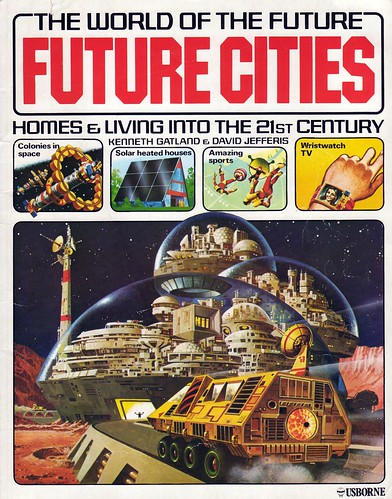
My parents grew up in an era where they had to dial an operator to reach another person on the telephone. My father recently upgraded his cell phone from the thirty dollar special of five years ago (one in which the LCD screen was simply a slightly more advanced version of a digital watch or pocket calculator) for that productive replacement for all businessmen - the BlackBerry. While I grew up, I feasted on low budget scifi movies and television series that depicted a future where our primary communication devices were still landlines, but now (meaning in the future) they had video cameras! How wholly inaccurate a prediction prognosticating writers of cinema had for our World of the Future...

Today, we have camera phones, but not for seeing each others' faces as we walk and talk. We post mobile images on profile sites with them, depicting our amusement at real world objects. All of our ridicule of the insane became witty observation as bluetooth users ramble on in one way conversations to passersby. Someone seeming to listen to their ipod stops mid gait and answers to voices only they can hear. We want communication incognito, so we text each other, our thumbs pounding out misspelled words to form sentences of atrocious grammar. Communication has become as passive as the billboard signs along the side of the road that no one really pays attention to anyway. So here we are in a new era of information streams wide and deep, able to post and peruse in a matter of seconds, and what do we do? We tweet. We follow celebrity gossip in 140 character snip-its because we can't settle for the thirty minutes of TMZ that comes on twice a day, or turn the channel every other half-hour to find another infotainment program attempting to one-up their rivals through teases of indecency - depicting celeb-u-tants in underage sex videos.

The adoption of new media by market forces is a predictable enough trend - as well as those forces catering to our prurient interests in the absence of regulatory forces. What doesn't pass for porn makes it to the tabloids, and our desire to know the depravity of others in order to measure that debasement against our own id is fed. The narratives that make sense of our world act similarly. Conservative or Liberal, the world is cut down into dualities because prismatic perspectives lack the tightness of logic these ideologies espouse. It is easier for us to accept that a man with the middle name of a dictator shares ideals with that dictator because of word association than to understand the history of a culture whose prevalence in another part of the world somehow infiltrated this one.

But moving from non-sequitur into my sequestering of these inter-tubes, the point of this blog is simple enough: Post observations of interests and comings across from the interweb to the interweb. A novel idea? No, that's something else entirely. This is less an experiment than an expression of aggravation, elation, or ennui.
Today, we have camera phones, but not for seeing each others' faces as we walk and talk. We post mobile images on profile sites with them, depicting our amusement at real world objects. All of our ridicule of the insane became witty observation as bluetooth users ramble on in one way conversations to passersby. Someone seeming to listen to their ipod stops mid gait and answers to voices only they can hear. We want communication incognito, so we text each other, our thumbs pounding out misspelled words to form sentences of atrocious grammar. Communication has become as passive as the billboard signs along the side of the road that no one really pays attention to anyway. So here we are in a new era of information streams wide and deep, able to post and peruse in a matter of seconds, and what do we do? We tweet. We follow celebrity gossip in 140 character snip-its because we can't settle for the thirty minutes of TMZ that comes on twice a day, or turn the channel every other half-hour to find another infotainment program attempting to one-up their rivals through teases of indecency - depicting celeb-u-tants in underage sex videos.

The adoption of new media by market forces is a predictable enough trend - as well as those forces catering to our prurient interests in the absence of regulatory forces. What doesn't pass for porn makes it to the tabloids, and our desire to know the depravity of others in order to measure that debasement against our own id is fed. The narratives that make sense of our world act similarly. Conservative or Liberal, the world is cut down into dualities because prismatic perspectives lack the tightness of logic these ideologies espouse. It is easier for us to accept that a man with the middle name of a dictator shares ideals with that dictator because of word association than to understand the history of a culture whose prevalence in another part of the world somehow infiltrated this one.

But moving from non-sequitur into my sequestering of these inter-tubes, the point of this blog is simple enough: Post observations of interests and comings across from the interweb to the interweb. A novel idea? No, that's something else entirely. This is less an experiment than an expression of aggravation, elation, or ennui.
Subscribe to:
Posts (Atom)

 Posts
Posts

